Four Wins, Fifth Place: South Lawrence’s State Tournament Finish Raises Questions About TMSAA Volleyball Format
Lady Stallions finish 4–1 in Murfreesboro, but a three-way pool-play tiebreaker ends their state championship hopes.
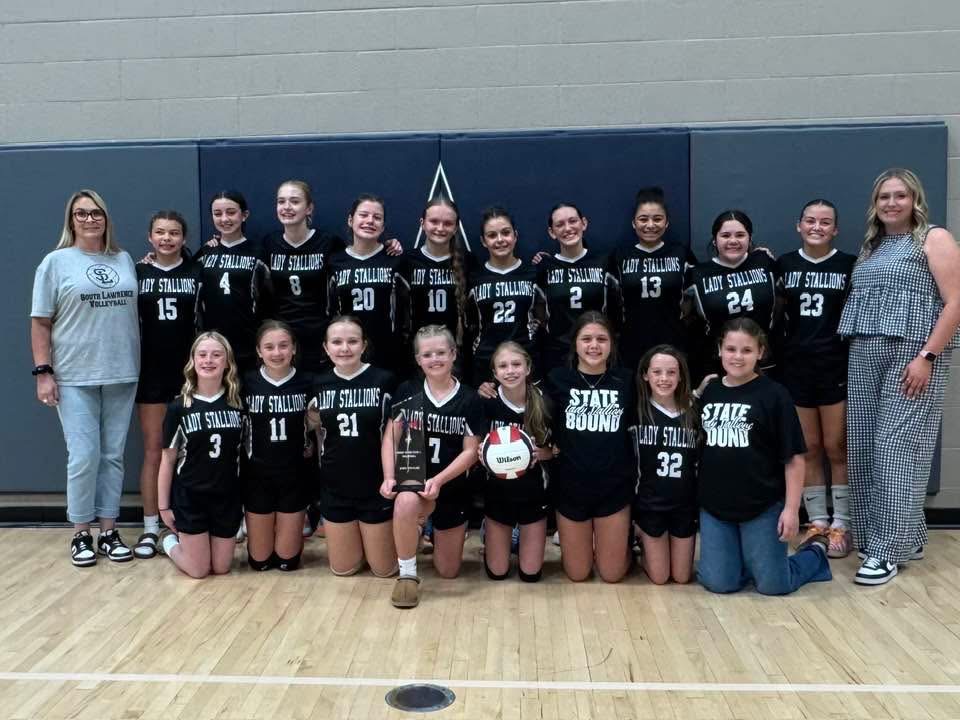
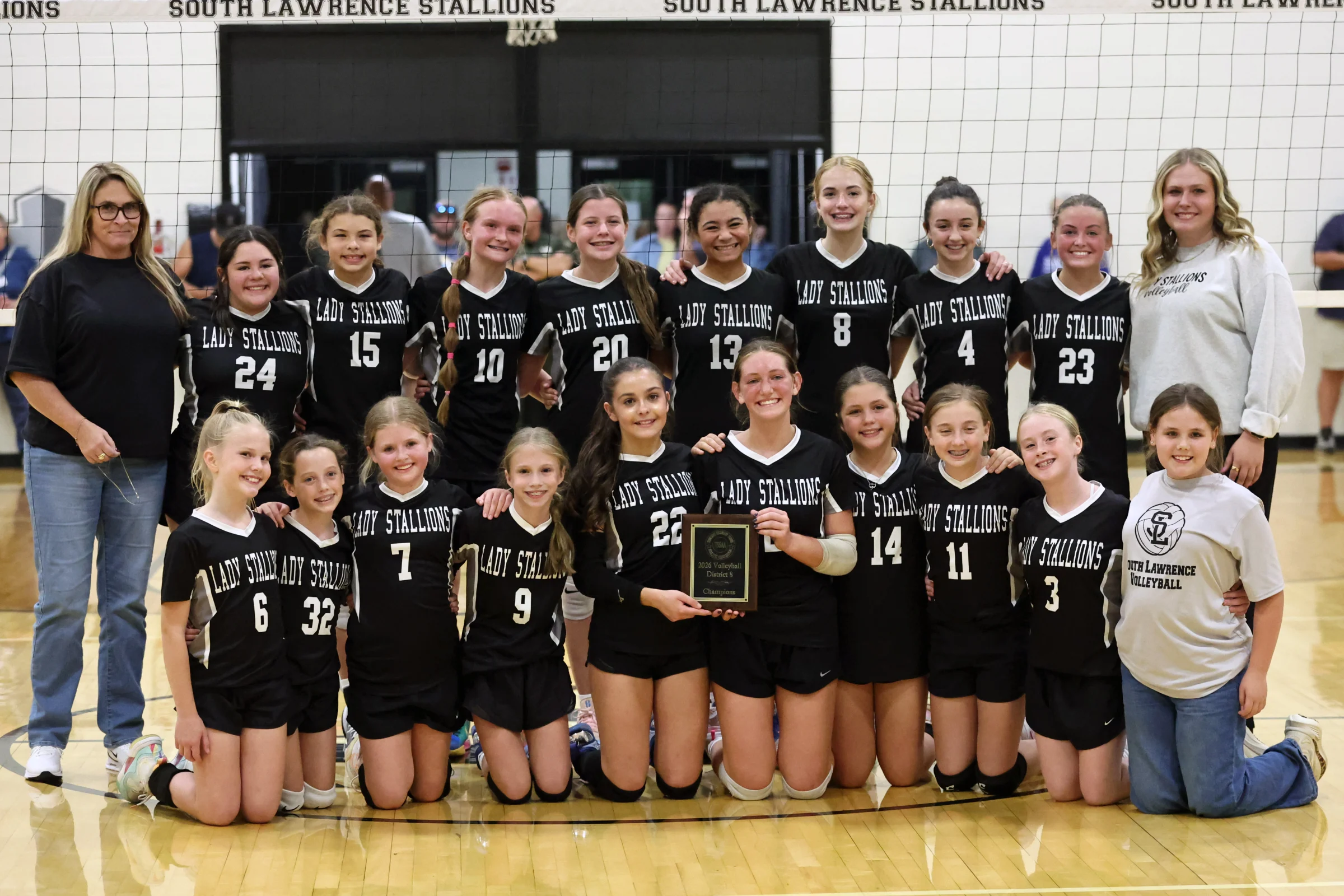
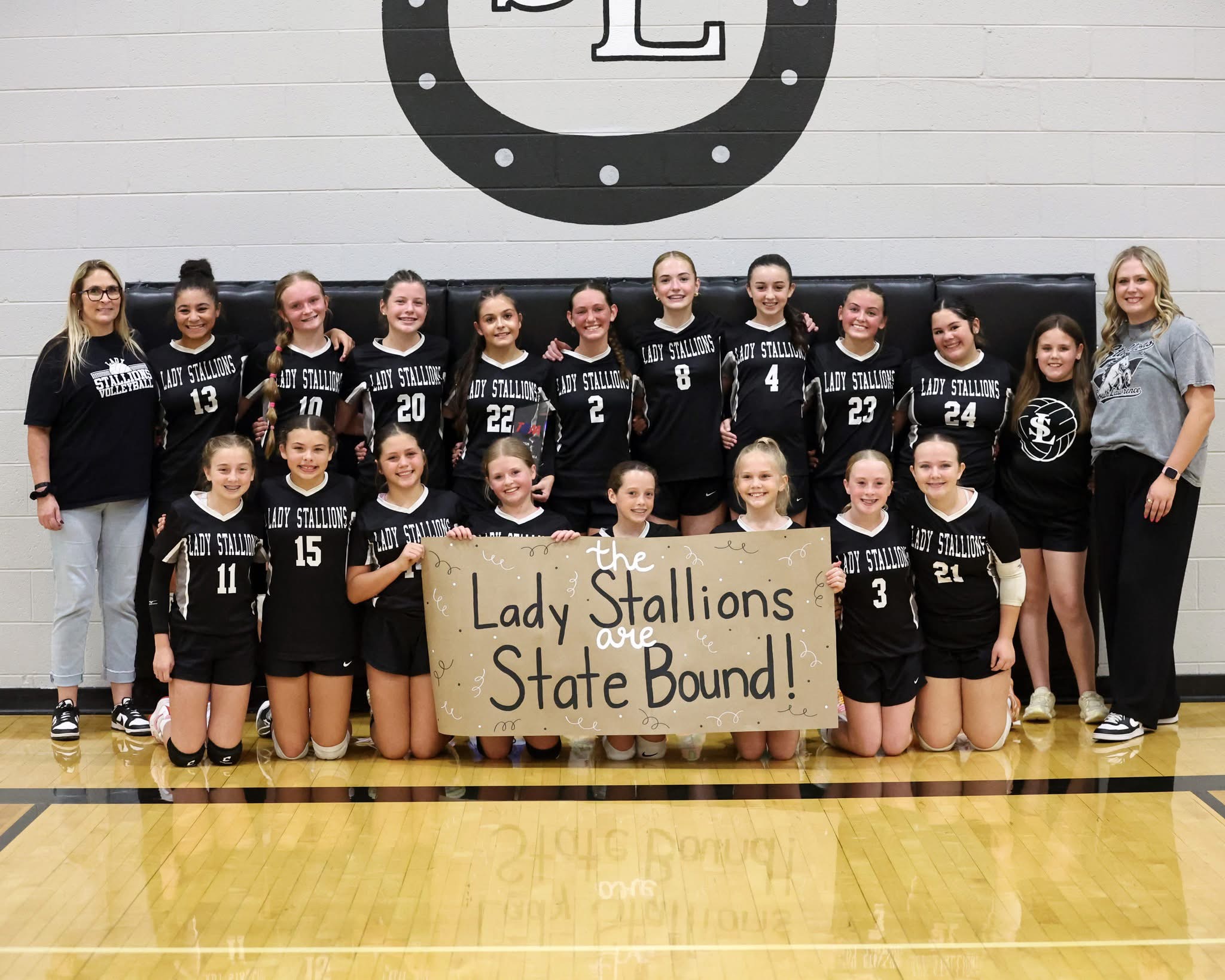
The South Lawrence Lady Stallions returned home from Murfreesboro with a fifth-place finish in the 2026 Tennessee Middle School Athletic Association (TMSAA) Class A Girls Volleyball State Championship, completing an impressive tournament run that included four consecutive victories without dropping a set.
But their performance also raises an important question about the format used to determine Tennessee’s middle school volleyball state champions: How can a team win four of its five matches at the state tournament, defeat the eventual third-place finisher, and still finish fifth without ever advancing to the championship bracket?
For South Lawrence, that is exactly what happened.
Lady Stallions Finish Strong at State
Competing October 8–9 at Siegel High School and Siegel Middle School, South Lawrence was one of eight teams competing for the Class A state championship.
The Lady Stallions opened pool play Thursday with a 2–0 loss to Sale Creek, falling 25–21 and 25–20.
South Lawrence responded in its second match against Charlotte Middle School, earning a hard-fought 26–24, 25–22 victory. The Lady Stallions followed with a convincing 25–10, 25–13 win over John Trotwood Moore Middle School to close out pool play.
Despite finishing Thursday with a 2–1 record, South Lawrence learned it would not advance to the four-team championship bracket.
Instead, the Lady Stallions would compete for fifth place.
South Lawrence made the most of that opportunity Friday morning, dominating University Middle School–Memphis 25–8 and 25–10.
That victory advanced the Lady Stallions to the fifth-place match against John Trotwood Moore, where they completed their state tournament appearance with another straight-set victory, winning 25–20 and 25–20.
South Lawrence finished the tournament with a 4–1 record, winning eight sets while losing only two.
Their only defeat came in the opening match.
How a Three-Way Tie Changed Everything
To understand how South Lawrence finished fifth despite winning four matches, it is necessary to examine the tournament’s pool-play format.
The eight participating teams were divided into two pools of four, with each team playing three matches Thursday.
Only the top two teams from each pool advanced to Friday’s championship bracket, where the state champion and second-, third-, and fourth-place finishers would be determined.
The remaining four teams competed in consolation matches for fifth place.
South Lawrence’s pool produced an unusual situation.
Charlotte, Sale Creek, and South Lawrence each completed pool play with identical 2–1 records. All three teams also won four sets and lost two.
The results created a three-way tie that could not be resolved by overall match records or set-winning percentages.
Each team had also defeated one of the others:
- Sale Creek defeated South Lawrence, 2–0.
- South Lawrence defeated Charlotte, 2–0.
- Charlotte defeated Sale Creek, 2–0.
Under the published TMSAA tiebreaking procedures, point differential among the tied teams became the deciding factor in identifying the top seed.
Charlotte finished with a plus-five point differential in matches among the three tied teams. Sale Creek finished at minus-one, while South Lawrence finished at minus-four.
Charlotte consequently earned the pool’s top seed. Under the tournament’s rules, the tiebreaking process then restarted for the remaining two teams. Sale Creek earned the second seed because of its head-to-head victory over South Lawrence.
That left the Lady Stallions third in the pool and outside the championship bracket.
Three teams finished with the same match record and set record, but only two were permitted to compete for the state championship.
For South Lawrence, the difference between competing for a state championship and competing for fifth place came down to the tiebreaking procedures.
A Fifth-Place Finish That Doesn’t Tell the Whole Story
The tournament’s final standings create an interesting comparison.
West Greene claimed the state championship with a perfect 5–0 tournament record. Wartburg Central finished second at 3–2, Charlotte placed third at 3–2, and Sale Creek finished fourth at 2–3.
South Lawrence finished fifth at 4–1.
That means the Lady Stallions won more matches at the tournament than the teams that finished second, third, and fourth.
Perhaps even more noteworthy, South Lawrence defeated eventual third-place finisher Charlotte in straight sets during pool play.
Those facts do not prove South Lawrence was better than every team that finished ahead of it. The teams faced different opponents after pool play, and no one can say with certainty how South Lawrence would have performed against West Greene or Wartburg Central.
But the results do demonstrate a limitation of the tournament format: the final standings do not necessarily reflect the overall win-loss records or establish a complete ranking of the eight participating teams.
South Lawrence never had the opportunity to play either of the state championship finalists.
Does Tennessee’s Middle School State Tournament Format Need to Change?
South Lawrence’s experience raises legitimate concerns about whether Tennessee’s current middle school volleyball state tournament format provides the fairest opportunity for qualifying teams to compete for a championship.
The concern is not that TMSAA incorrectly applied its published rules. The procedures were established before the tournament, and the results are consistent with those procedures.
The more significant question is whether those procedures create the best possible championship format.
First, a team can be removed from championship contention after just three pool matches.
South Lawrence’s tournament is an example. The Lady Stallions lost only once, won their remaining four matches, and finished with one of the tournament’s best overall records. Yet they had no opportunity to advance beyond fifth place once Thursday’s pool-play standings were determined.
A state tournament should arguably provide teams with an opportunity to compete for the title through direct elimination matches, rather than having championship eligibility decided entirely by pool standings.
Second, point differential can carry enormous consequences.
Point differential is a reasonable tool for separating teams with identical records, but in this tournament, it helped determine which teams could continue pursuing a state championship and which teams could not.
In South Lawrence’s pool, all three tied teams had the same match and set records. A relatively small difference in points determined the first seed, after which head-to-head results determined the remaining positions.
In volleyball, where sets are frequently decided by only a few points, that creates a situation in which a handful of rallies can influence whether a team’s championship hopes remain alive.
Third, teams can face different paths to advancement depending on their pool assignments.
South Lawrence finished 2–1 in Pool C and failed to advance. Wartburg Central also finished 2–1 in Pool D and advanced to the championship bracket, ultimately finishing as state runner-up.
Both teams earned two victories in pool play, but only one received an opportunity to compete for the championship.
That does not establish that one pool was necessarily stronger than the other. It does, however, illustrate how a format that automatically advances two teams from each pool can produce different outcomes for teams with identical records.
The composition of a four-team pool can have an enormous impact on a team’s opportunity to advance.
Finally, fifth place became the highest possible finish for South Lawrence before the tournament’s second day even began.
No matter how convincingly the Lady Stallions won Friday, their opportunity to compete for a state championship had already ended.
They won both Friday matches without dropping a set, but those victories could not improve their placement beyond fifth.
That is a difficult result to reconcile with the idea that a state championship should provide each qualifying team a meaningful opportunity to compete for the title.
A Different Format Could Offer a Fairer Opportunity
One alternative worth considering would retain Thursday’s pool play but advance all eight teams into a single-elimination championship bracket Friday.
Pool-play results could determine seeding, with higher-seeded teams facing lower-seeded opponents in the quarterfinals.
From there, teams would advance by winning matches on the court.
Such a format would still reward strong pool-play performances through favorable seeding while ensuring that every qualifying team entered the championship round with an opportunity to win the title.
It would also mean that teams would have to lose a direct elimination match before being removed from championship contention.
This approach would require additional matches and potentially more court time, scheduling adjustments, or resources. Those are legitimate considerations for tournament organizers.
However, the additional demands should be weighed against the importance of providing a competitive championship structure.
After all, qualifying for a state tournament represents the culmination of an entire season of work for middle school athletes and coaches.
A format that gives all eight teams a path through a championship bracket would be worth serious consideration.
A Finish Worth Celebrating, and a Format Worth Reexamining
None of these concerns should diminish the accomplishments of West Greene, which earned the state championship, or any of the other participating teams. Those teams competed under the same published rules and earned their official placements.
Nor should the discussion take anything away from what South Lawrence accomplished.
The Lady Stallions represented their school and community at the highest level of Tennessee middle school volleyball, rebounded from an opening-round loss, and won four consecutive matches to bring home a fifth-place state trophy.
That is an accomplishment worthy of recognition.
But their experience also presents TMSAA with an opportunity to consider whether the tournament’s structure could be improved for future competitors.
South Lawrence finished fifth in the official standings. That is a fact. Whether the Lady Stallions were truly the fifth-best team in the state is a question the tournament format never gave them the opportunity to answer.
And perhaps that is the strongest argument for change.
A state championship should not simply produce a champion and a list of placements. Its format should provide the participating teams with the fairest reasonable opportunity to compete for those positions.
The Lady Stallions earned their fifth-place finish.
Their 4–1 tournament record also provides a compelling reason to take another look at how Tennessee determines its middle school volleyball state champions.
⸻
Sources: Official 2026 Class A State Championship Results and Middle School Volleyball State Championship Tournament Procedures.
Beyond the final score
Keep up with the rest of Loretto.
Sports brings you here. These tools make it easy to see what else is happening around town.
Thank you for reading We Are Loretto News.